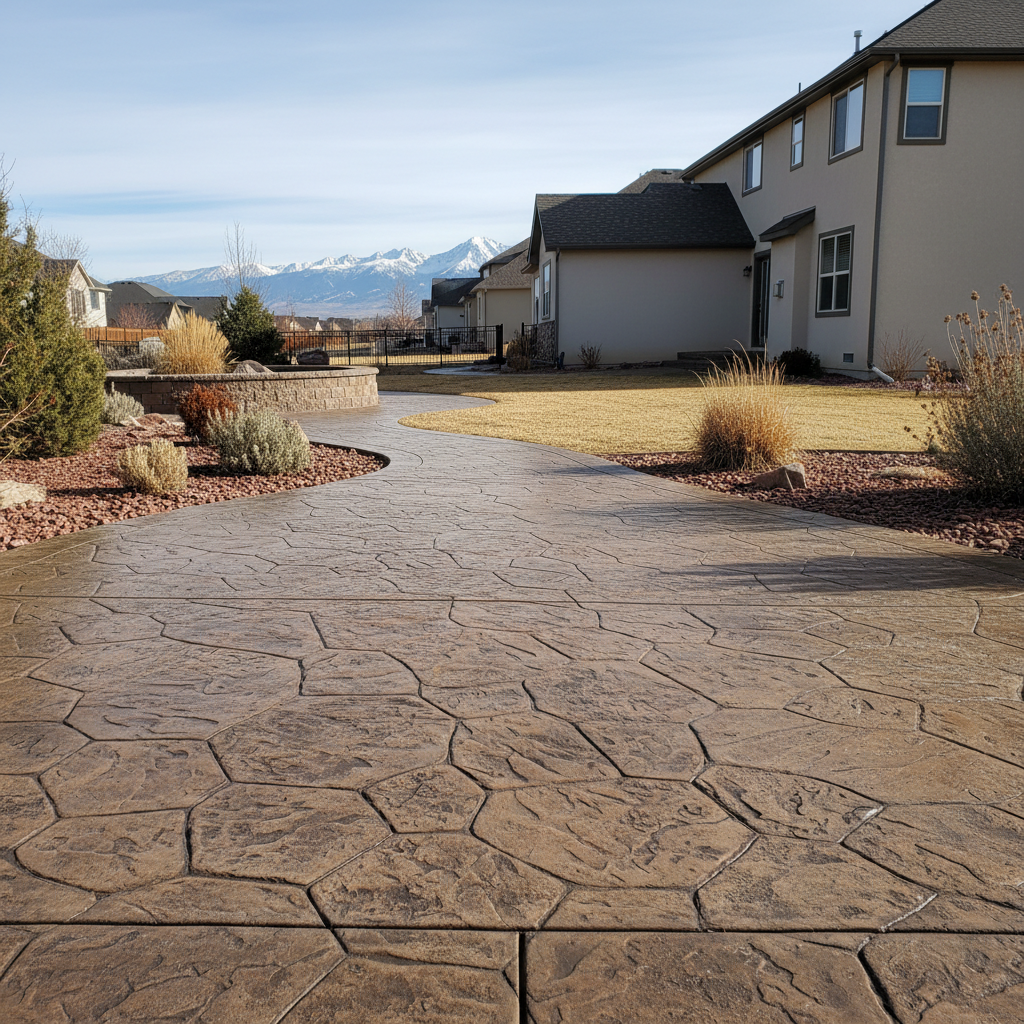
You have that good-looking Stamped Concrete patio or driveway, right? It adds a lot of curb appeal. It also just looks great. But living here in Layton, we know our weather is not always kind to outdoor surfaces. Those hot summers and freezing winters can really wear down your concrete if you are not smart about how you take care of it. So, we will talk about what the local climate means for your Stamped Concrete. We will also talk about how to keep it looking good all year long.
When to Schedule Your Stamped Concrete Project
Timing is important when it comes to pouring concrete. This is especially true for Stamped Concrete where the finish is so important. You want conditions that let the concrete cure properly. It should not cure too fast. It should not cure too slow. Here in Layton, that means we are looking for those good times in the spring as well as the fall.
- Spring (April to early June): This is often a good time. The temperatures are usually mild. It is not too hot. It is not too cold. Layton's average high temperatures in April are around 60°F. May is around 70°F. Concrete cures best when temperatures are between 50°F and 85°F. 50-70°F is the best range. Spring also tends to have medium humidity. This helps with the curing process. We do need to watch out for spring rains. This is especially true in April as well as May. These can be some of our wetter months. You do not want heavy rain on fresh concrete.
- Fall (September to October): This is another good time. The very hot summer weather has usually gone away. We get those warm days as well as cool nights. September's average high is around 79°F. This drops to 66°F in October. This lets the concrete get strong before winter comes. In addition, concrete suppliers and installers are often trying to finish up projects before the really cold weather starts. So, it can be a busy time.
- Summer (July and August): We can pour in the summer. But it is harder. Layton's July and August average highs are 90-91°F. When it is too hot, concrete can dry too quickly. This can lead to cracking. It can also lead to a weaker surface. If we are pouring in the summer, we often have to start very early in the morning. We also might work into the evening to avoid the hottest part of the day. Our team will also use special methods. This includes adding ice to the mix. We also use curing compounds to manage the heat.
- Winter (November to March): This is generally not a good time for new Stamped Concrete pours. Layton sees average daily highs below 45°F from late November to late February. January's average low is 25°F. Concrete needs to be kept above 40°F during curing. Ideally, it should be 50-60°F. This prevents freezing. Freezing can badly damage the concrete. It can also make it weak as well as brittle. We get a lot of snow too. December is our snowiest month.
Weather Conditions That Affect the Work
It is not just the season. Daily weather plays a big part. Aim High Concrete is always checking the forecast for a few key things:
- Temperature: As we said, the best range for pouring and curing is 50-70°F. If it is too hot, the concrete sets too fast. This makes it hard to get that perfect stamped pattern. If it is too cold, it sets too slowly. It also risks freezing.
- Precipitation: Rain is bad for fresh concrete. Even light rain can damage the surface. We need a few dry days after the pour for good curing. Layton's wettest months are usually April as well as May.
- Wind and Sun: Strong winds and direct sunlight can dry out the concrete surface too quickly. This leads to shrinkage cracks. We might use covers. We also might work at certain times of day to help with this.
- Freeze-Thaw Cycles: This is a big problem for us along the Wasatch Front. Water gets into tiny holes in the concrete. It freezes. It expands. Then it thaws. This causes stress. It also causes cracking or spalling over time. This is why we use air-entrained concrete mixes. These mixes are made to resist this problem. This is also why proper sealing is very important.
- Soil Conditions: Many areas of Layton, especially closer to the mountains, have clay-rich soils. These soils get bigger when wet. They get smaller when dry. They also react to freeze-thaw cycles. This movement can damage concrete slabs if the sub-base is not prepared correctly. That is why Aim High Concrete always focuses on a thorough site assessment. We also focus on proper sub-base preparation to make sure there is a solid foundation.
Protecting Your Stamped Concrete Investment All Year Round
Once your Stamped Concrete is installed, you want it to last. Here is how to protect it through Layton's seasons:
- Regular Cleaning: Once a year, give it a good cleaning. A pressure washer with a mild soap works great to remove dirt as well as debris.
- Resealing is Important: This is probably the most important maintenance step. The clear sealer protects against moisture. It also protects against UV rays. UV rays are strong at our elevation. It also protects against wear. In Layton's climate, you will need to reseal every 2-3 years. Or at most every 5 years. This depends on how much traffic it gets. It also depends on how much sun it gets. If you skip it, the color will fade. Water will soak in instead of rolling off. You will also get freeze damage. You can test if it needs resealing. Put a drop of water on it. If it immediately gets dark, it is time.
- Winter Care: This is where a lot of damage can happen.
- Avoid De-icers: Rock salt and chemical de-icers, especially those with ammonium nitrate or sulfate, can be very bad for concrete. They can cause scaling. For newer concrete, which is under a year old, definitely do not use them. The concrete has not reached its full strength yet.
- Use Sand: If you need traction, sand is your best choice. It is safe for your concrete. It is also easy to get.
- Snow Removal: Be careful with shovels as well as snowblowers. Do not use metal blades directly on the surface. This can scratch or chip the sealer. It can also chip the concrete.
- Address Cracks Quickly: If you see small cracks, get them fixed. Leaving them lets water get in. This leads to bigger problems. This is especially true with our freeze-thaw cycles.
Your Stamped Concrete is a big investment. It is also a good addition to your home. With a little seasonal care, especially when it comes to scheduling as well as consistent resealing, it will stand up to Layton's unique climate for many years. If you have questions about your Stamped Concrete, or need help with maintenance, give us a call at Aim High Concrete. We are here to help you protect that investment.