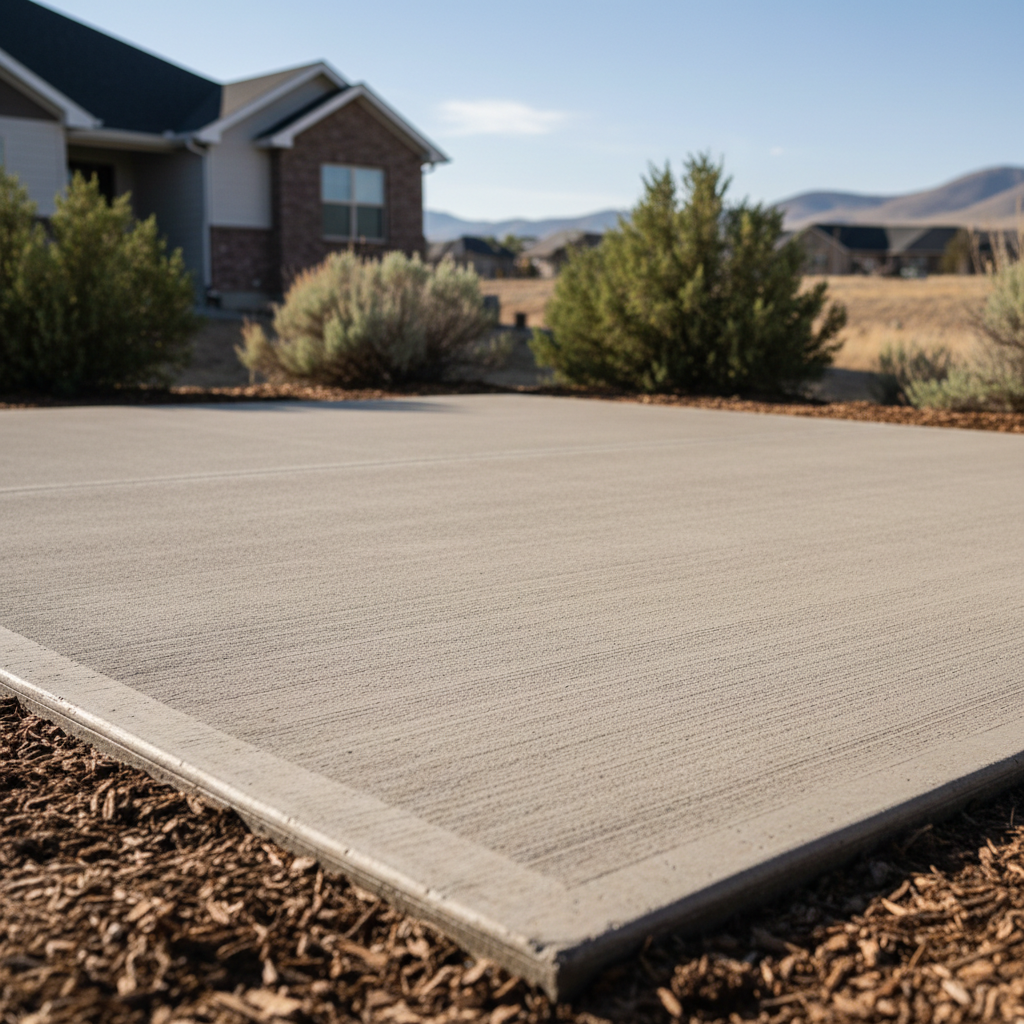
Are you tired of staring at that cracked driveway or thinking about finally putting in a backyard patio? Concrete flatwork changes the entire look of a property, but it is not a project you want to jump into blindly. Living right here along the Wasatch Front in Layton, UT means dealing with clay-heavy soils and freezing winters that can wreck a poorly poured slab in no time.
Before a single yard of concrete gets ordered, you have got to look at the prep work. If you are handy and want to save some cash, you can tackle the demolition of your old concrete and even handle the initial excavation. Breaking up an old patio with a rented jackhammer and hauling it to the Layton landfill takes a lot of sweat, but it is totally doable over a weekend. That said, getting the sub-grade properly compacted is a different story. Our local soil shifts around, so if you do not lay down a solid base of road base and compact the life out of it, your new slab will crack and sink.
When pour day arrives, that is where we always tell homeowners to draw the line between DIY and calling in professionals like our crew at Aim High Concrete. Concrete waits for no one. Once it starts kicking off, you have a very limited window to screed it flat, float the surface, and trowel the edges before it gets too hard to work. If you try to pour a large driveway by yourself, you are going to end up with a lumpy mess that holds puddles every time it rains.
During the pour, a pro crew knows how to cut control joints in the right spots to manage the natural cracking that happens as the concrete cures. Aim High Concrete also pays close attention to the slope, making sure water drains away from your foundation instead of pooling against your house. You just cannot wing that kind of precision.
After the pour is finished, the job shifts to curing. Concrete does not actually dry; it undergoes a chemical reaction that needs moisture to reach its maximum strength. Keeping that fresh slab wet for a few days after it goes down makes a massive difference in how long it lasts. You can handle the curing process easily by laying down a sprinkler or spraying it down regularly. Give it a few days before you walk on it, and wait at least a week before you park any heavy vehicles on a new driveway. Take your time, know your limits, and you will end up with flatwork that looks great for decades.