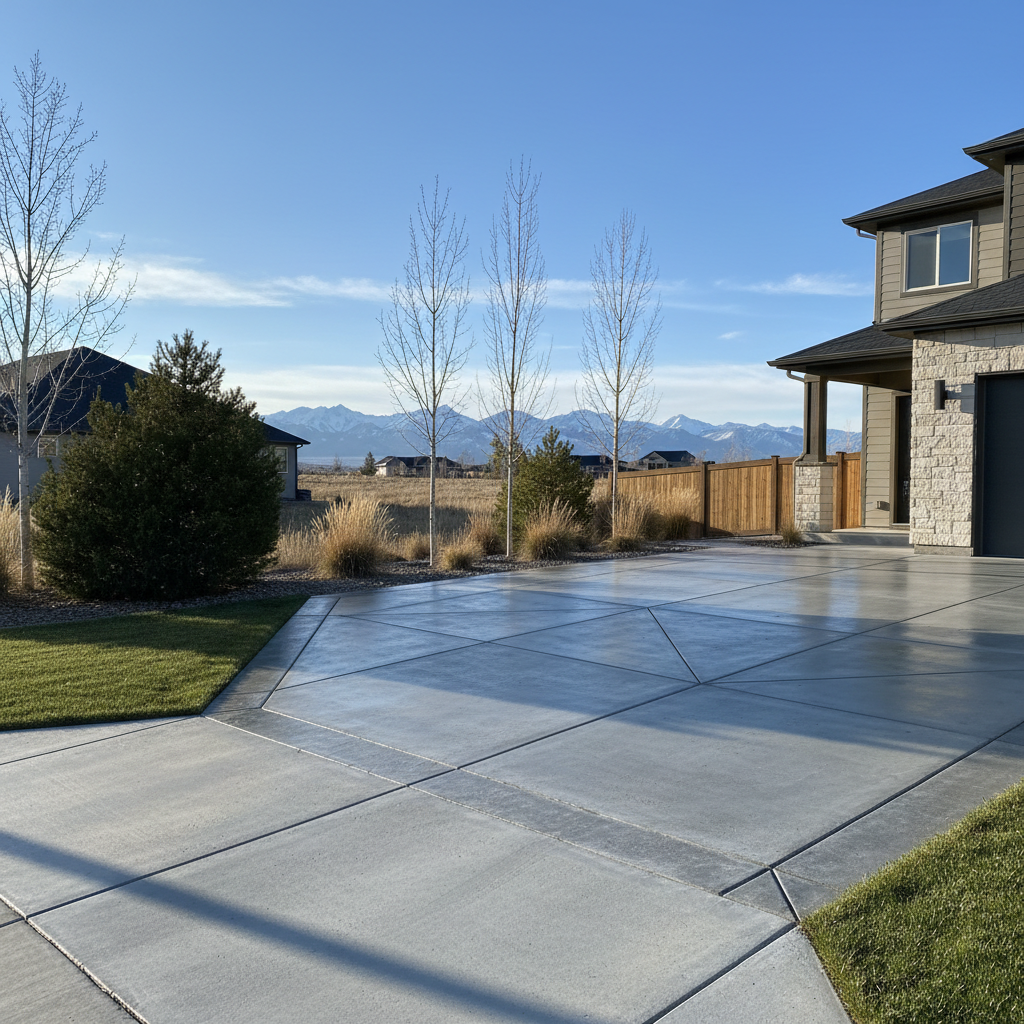
Ever notice how some driveways around Layton look great for decades while others start crumbling after just a few winters? It usually comes down to maintenance. Here around Davis County, our weather puts concrete through a lot of stress. We get baking summer heat that cracks dry soil, followed by freezing winter nights where moisture gets trapped, expands, and tears slabs apart from the inside out.
If you want your flatwork to survive the local climate, you cannot just pour it and forget it. Aim High Concrete sees it all the time out near Ellison Park or up toward the East Layton benches where homeowners skip basic upkeep and pay for expensive replacements too early. Here is what you actually need to do to keep your concrete solid.
The Real Deal on Sealing
Sealing is your first line of defense against our harsh winters. Layton gets plenty of snow, and the city crews lay down salt and chemical de-icers on the roads. When you track that slush onto your garage floor or driveway, it eats away at the surface paste. You need to apply a quality penetrating sealer every two to three years. Pour a little water on your slab. If it beads up, you are good. If it soaks in dark within a minute, it is time to seal.
Do not wait until you see pitting. Clean the surface thoroughly, let it dry out completely for a couple of days, and roll on a breathable sealer. It takes an afternoon and saves you thousands of dollars.
What Regular Upkeep Looks Like
Keeping your concrete alive does not take a full-time job, but it does take consistency. Wash off oil, fertilizer, and leaves before they stain or degrade the surface. In the fall, keep wet leaves off your patio because trapped organic matter holds moisture right against the concrete when the first freeze hits.
- Clear snow with a plastic shovel instead of metal edges that gouge the surface.
- Skip harsh chemical de-icers like ammonium nitrates; use plain sand for traction or a safe calcium chloride alternative.
- Pull weeds growing near expansion joints before their roots wedge the slabs apart.
Warning Signs You Shouldn't Ignore
Concrete talks to you long before it fails completely. You just have to listen. Hairline cracks under a sixteenth of an inch are usually just normal shrinkage, but once they start opening up or one side of the crack drops lower than the other, you have got movement. Spalling, where the top layer flakes off like a biscuit, means water got trapped underneath during a freeze.
Aim High Concrete often tells homeowners that small cracks are easy to fix with a good polyurethane caulk, but shifting panels mean your sub-base washed out. Ignore those signs, and a simple lift-and-seal job turns into a full tear-out.
When It is Time to Call a Professional
Some things you can handle with a weekend brush and a bucket of patch material, and some things need heavy equipment. If your driveway is sinking toward your foundation, or if you have got wide, jagged cracks running completely through a patio slab, patch kits are not going to cut it. Mudjacking, foam jacking, or complete replacement require pros who understand local soil conditions, especially the heavy clay and silt common across Layton neighborhoods.
Call Aim High Concrete if your concrete is starting to show its age or if you want an honest opinion on whether a slab can be saved. A little proactive care goes a long way toward keeping your property safe and looking sharp year-round.